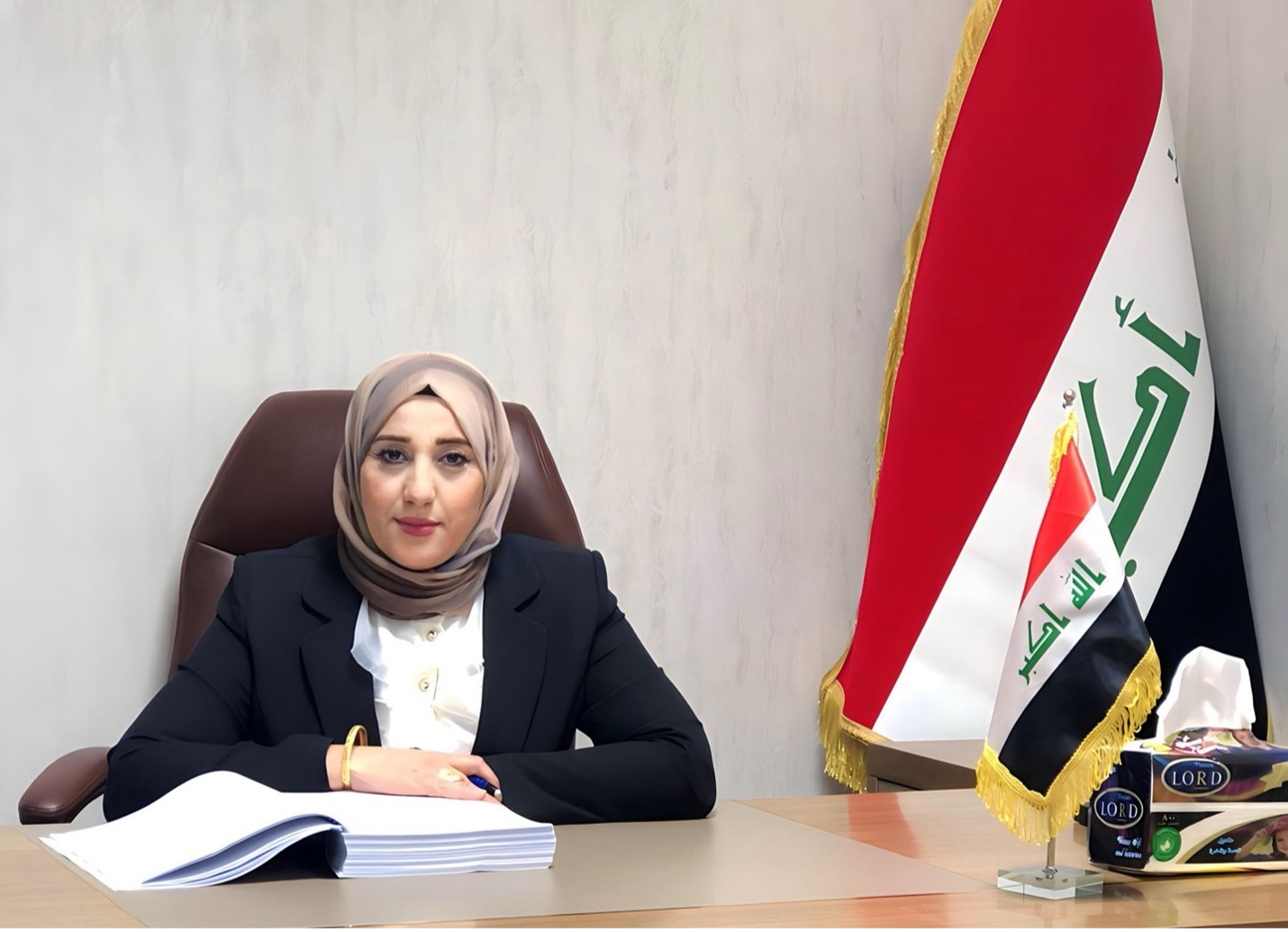
"I dedicated myself to addressing the difficulties and obstacles faced by women in camps and worked tirelessly to find solutions that facilitate their return and reintegration into their own community." — Mrs. Oras Aabd
Behind every statistic on displacement is a person with a mission. For Mrs. Oras Aabd, that mission became a calling. An educational supervisor specializing in English, Oras has served across multiple Iraqi provinces throughout her career. Most recently, she took on one of her most demanding roles yet — heading the Educational Supervision Unit for displaced students in Sulaymaniyah, while maintaining deep ties to her home community in Al-Qaim.
A Mission in the Camps
Oras's work began where most people look away. Displaced families living in camps across Iraq face not only the trauma of losing their homes, but a tangle of practical barriers — lack of documentation, disrupted schooling, social isolation — that make return feel impossible. Oras saw those barriers not as walls, but as problems waiting for solutions.
She launched a documentation support initiative that helped over 200 families navigate the administrative process required to return to Al-Qaim. Her approach was never top-down. She listened first, then acted — a method rooted in respect for the communities she served.
"Every individual has a message they wish to convey to society."
Her impact goes beyond the immediate relief she has provided. By working patiently at the intersection of education, community trust, and local governance, Oras has helped create conditions for sustainable return — not just a physical journey home, but a social one.
What Her Story Tells Us About Peacebuilding in Iraq
Women and children are disproportionately affected by conflict and displacement. Yet they are also among the most powerful agents of recovery and peace. Oras's story is a reminder that when women are supported, equipped, and given space to lead, entire communities move forward with them.
Her journey is not extraordinary because of grand gestures. It is extraordinary because of daily, deliberate commitment — to showing up, to problem-solving, and to believing that one person's effort can shift the course of many lives. At Aligning Cultures, stories like Oras's are why we do this work. They remind us that sustainable peace is built not only in conference rooms, but in communities — by people like her.