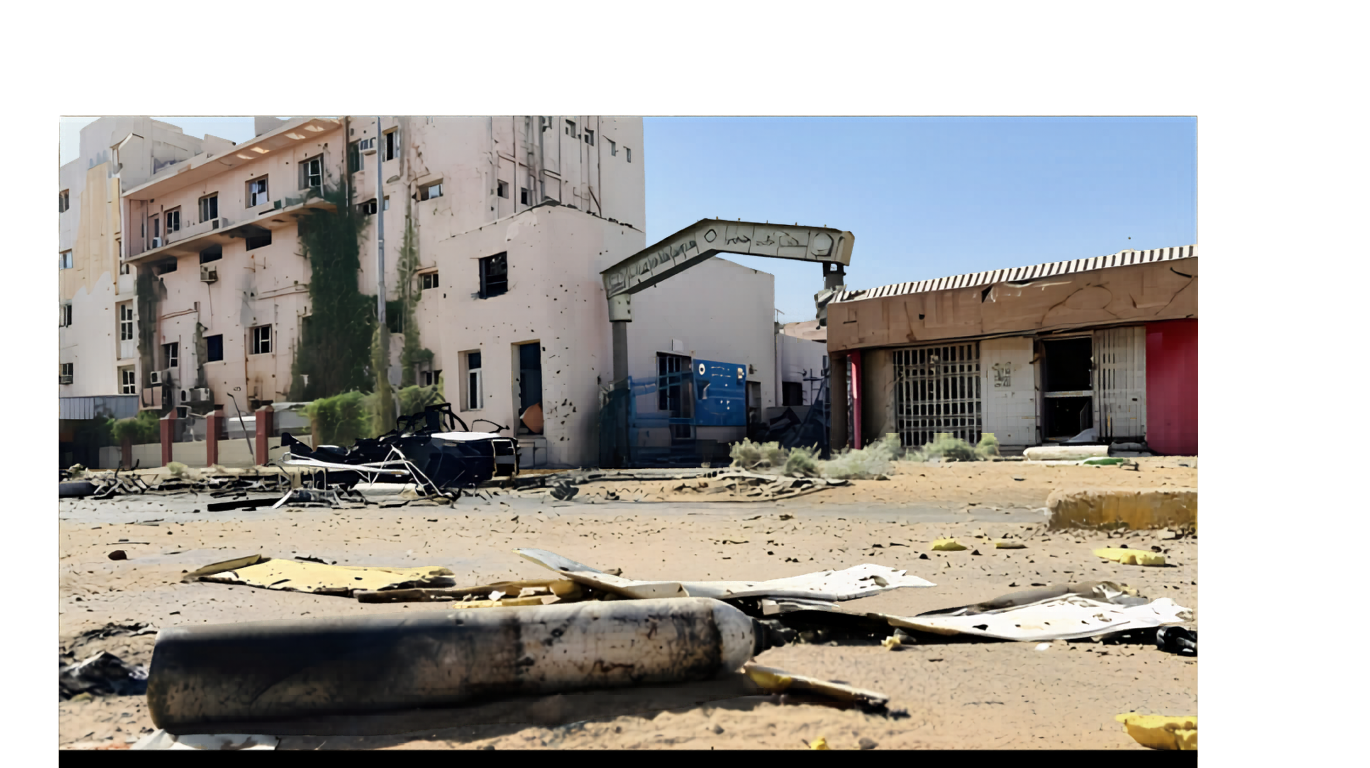
"There are no wounded — all killed."
These words, reported from survivors and witnesses inside El Fasher, capture something that statistics cannot: the totality of destruction that modern conflict inflicts on civilian populations. In Darfur today, the line between injury and annihilation has been erased. Entire neighborhoods emptied. Families torn apart. A city under siege, largely out of view of the global conversation. The silence around El Fasher is itself a kind of atrocity.
The Cost of Inaction
What is happening in Darfur is not a distant or abstract crisis. It is the foreseeable result of decades of political marginalization, resource competition, ethnic targeting, and the repeated failure of the international community to hold perpetrators accountable. Every ceasefire that collapsed, every peace process that excluded the people most affected — each failure compounded the next. We are living with the consequences of that accumulated inaction now.
Aligning Cultures has operated in Sudan's most conflict-affected regions — Darfur, South Kordofan, and Blue Nile — amid one of the world's worst ongoing humanitarian crises. We have conducted comprehensive needs assessments, identified and vetted 13 local civil society organizations as potential sub-grant recipients — including women-led and youth-led organizations — and supported multiple Sudanese CSOs through the organizational disruption caused by the cessation of US foreign aid.
What Peace Requires
At Aligning Cultures, we are clear about one thing: a ceasefire is not peace. Silencing the guns — what scholars call 'negative peace' — is a necessary first step, but it is not an end. Real, sustainable peace demands three things.
Accountability
Those who commit atrocities must face justice. Without accountability, impunity becomes permission — and the next cycle of violence is only a matter of time. The international community's failure to hold perpetrators accountable in Darfur over the past two decades has contributed directly to the crisis we witness today.
Inclusion
Every peace process that has excluded women, youth, and marginalized communities has eventually failed. The people most harmed by conflict must be at the table when its future is decided. This is not a soft principle — it is a hard-won lesson from decades of conflict resolution practice across the Middle East, North Africa, and the Horn of Africa.
Addressing Root Causes
Inequality, resource scarcity, and political exclusion do not disappear with a peace agreement. They must be tackled deliberately — or they will resurface, as they have before. Aligning Cultures' programming in Sudan includes comprehensive needs assessments, civil society capacity building, and community resilience initiatives designed to address these underlying drivers of conflict.
The Choice Before Us
The words from El Fasher — 'there are no wounded, all killed' — are not just a report from one city. They are a warning about what the world permits when it looks away. The choice is stark: allow this devastation to continue, or commit to the difficult, deliberate, and necessary work of building a peace that is just, inclusive, and enduring. At Aligning Cultures, we have made our choice. We believe that every community — no matter how shattered — carries within it the seeds of recovery. Our work is to help those seeds take root. The people of El Fasher deserve nothing less.