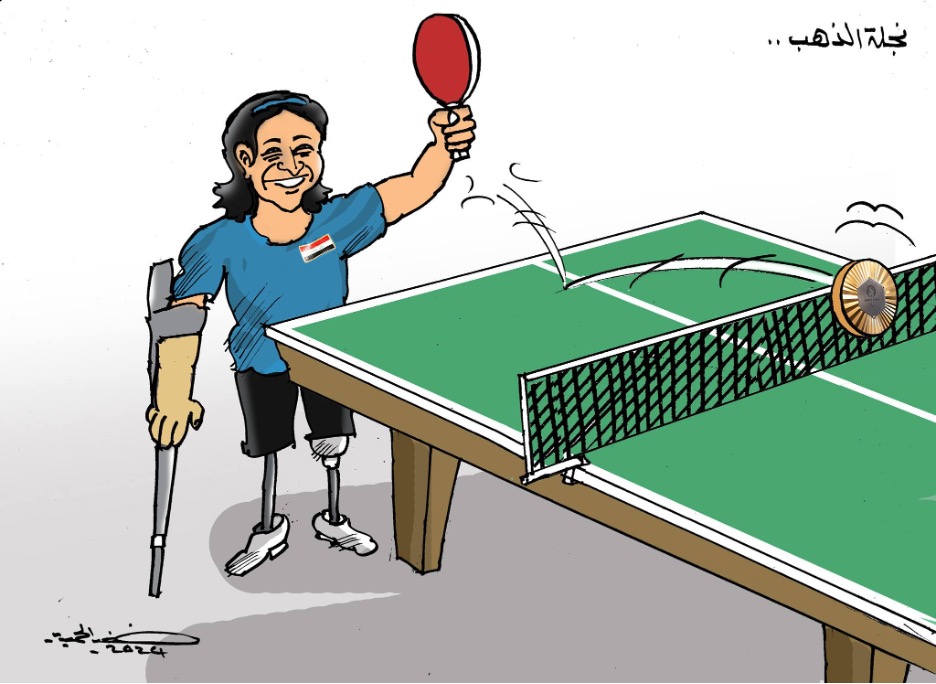
At three years old, Najla Imad Lafta lost most of her right leg, her left leg below the knee, and her right forearm — the result of a sticky bomb attack on her father's car in Baqouba, northeastern Iraq. Years later, she stood on a podium with a gold medal around her neck, having made history for her country. Najla's triumph is extraordinary. But so is the system she had to fight against to get there.
A System That Leaves Children Behind
According to a recent report by the IOM – UN Migration, children with disabilities in Iraq face exclusion at nearly every level of the education system. Schools turn them away — not out of indifference alone, but because teachers lack the training and resources to support them, buildings are physically inaccessible, and materials like audiobooks, braille, or sign language instruction are largely absent. Children with intellectual disabilities are especially underserved. Even those who do access schooling often find curricula and classroom environments that were not designed with them in mind.
The barriers don't stop at the school gate. Many families do not understand disability rights and actively isolate relatives with disabilities, viewing them as a burden rather than as people with potential. For many children with disabilities in Iraq, exclusion begins at home.
What Najla's Story Tells Us
Against that backdrop, Najla's gold medal isn't just a sporting achievement — it's a statement about what becomes possible when a person with a disability is supported, not sidelined. She is not an exception to the rule. She is proof that the rule is getting it wrong.
What Needs to Change
Addressing this crisis requires more than good intentions. It requires inclusive school policies, trained educators, accessible infrastructure, and family-level awareness about the rights and potential of people with disabilities. It means building systems that focus on what persons with disabilities can do — and removing the structural barriers that prevent them from doing it.
At Aligning Cultures, we believe that no community can truly heal or thrive while any of its members are systematically excluded. Disability inclusion is not a separate agenda — it is central to building the resilient, cohesive communities we work toward every day across Iraq, Syria, Sudan, Yemen, and the broader MENA region.
When we design youth employment programs, we set explicit inclusion targets for persons with disabilities. When we train community leaders, we build awareness of disability rights. When we support local civil society organizations, we encourage them to center inclusion in their own programming. Najla's medal belongs to Iraq. The work of making sure every child like her gets a fair chance belongs to all of us.